
The More You Know: Texas Whiskey Has a Cooperage of Its Own
Whiskey spends years in a barrel.
For most of that time, we talk about what the barrel does to the whiskey. We talk about oak, char, climate, extraction, color and flavor.
We don't spend nearly as much time talking about where that barrel came from.
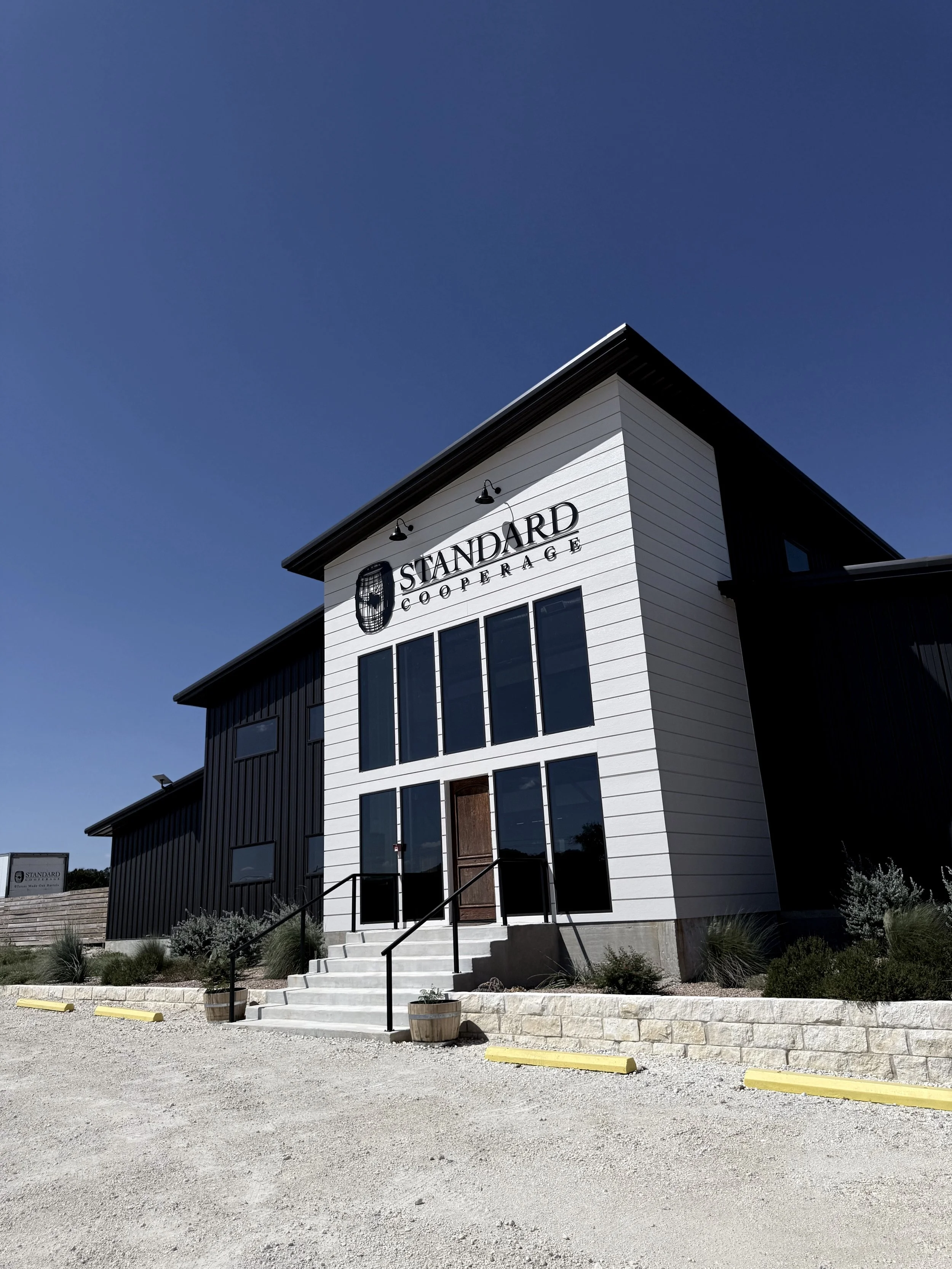
Just outside of Blanco, Texas, Standard Cooperage is changing that conversation.
Standard Cooperage is the first and only cooperage in Texas, building barrels from scratch for whiskey, wine and other producers. More importantly for the Texas whiskey industry, it gives distillers something they have never had before: a barrel maker in their own backyard that understands what it means to mature whiskey in Texas.
It Starts With a Log
At Standard Cooperage, barrel making doesn't begin with a shipment of finished staves.
It begins with whole logs.
Wood arrives from different regions across the country, and Standard controls the process from there. The logs are split and cut into staves before beginning one of the most important—and time-consuming—parts of the process: seasoning.
Rather than kiln drying the wood to accelerate the process, Standard yard ages its staves outdoors.
That matters because preparing oak isn't simply about getting moisture out of the wood. How oak is seasoned changes the compounds available to interact with the spirit later. Time, weather and exposure all become part of preparing that piece of wood for its eventual job as a barrel.
And when whiskey may spend years interacting with that wood, those decisions matter.
Building a Barrel for the Job
Standard also builds its barrels with thicker staves and hoops.
Then there is the fire.
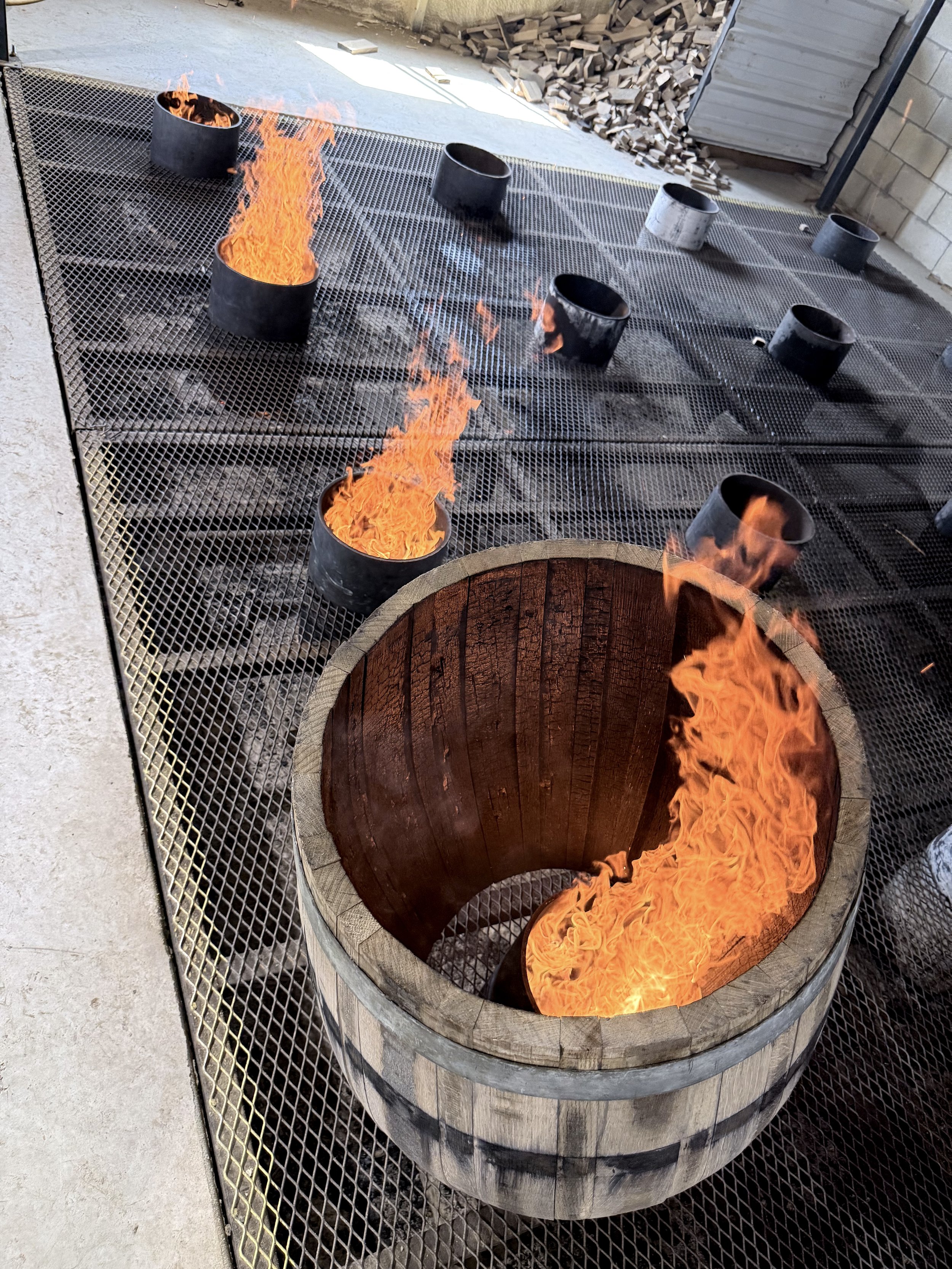
When it comes time to char the inside of a barrel, Standard uses a wood-burning fire rather than a gas flame.
Char is much more than the blackened interior you see when looking inside a new whiskey barrel. Heat transforms the oak, creating and exposing compounds that will eventually contribute flavor, aroma and color to the whiskey.
How that heat is applied is another variable in a process filled with them.
Species of oak. Where the tree grew. How the wood was seasoned. Toast. Char. Construction.
The barrel isn't just a container.
It is an ingredient.
Why This Matters for Texas Whiskey
Texas whiskey has always had to contend with an environment very different from many traditional whiskey-producing regions.
Our heat is different. Our temperature swings are different. The way whiskey interacts with a barrel here can be dramatically different.
Until now, Texas distillers have purchased barrels made elsewhere and adapted them to what they were trying to accomplish here.
Standard Cooperage creates a different opportunity.
A Texas distiller can drive to Blanco, walk through the cooperage and have a conversation with the people actually building the barrels. They can custom order barrels and make choices about the wood, including sourcing oak from specific regions of the country.
That creates another level of experimentation.
What happens when the same whiskey goes into barrels made from oak grown in two different regions? What happens when you change the toast or char? How does a particular barrel construction perform through a Texas summer?
Those aren't just questions for the cooperage.
They're questions a distiller can explore with the cooperage.
And that may be the most important part of Standard Cooperage's arrival.
A Texas Partner
Texas whiskey has matured considerably over the past decade.
Distilleries have learned how to make whiskey in this climate rather than simply applying techniques developed somewhere else. They've experimented with grains, stills, fermentation, maturation and blending to figure out what works here.
Now the barrel can become part of that same conversation.
Having the first cooperage in Texas isn't important simply because we can say barrels are being made in Texas.
It's important because Texas distillers now have a barrel-making partner close enough to understand their challenges, listen to what they're trying to accomplish and build something specifically for the job.
The results of those collaborations won't be known tomorrow.
They're sitting in warehouses across Texas, changing a little bit every day.
And someday, we'll get to taste them.
The More You Know explores the people, processes and ideas behind the whiskey in your glass.
Keep Exploring: What Does Certified Texas Whiskey Mean?
If where a barrel comes from matters, so does where the whiskey inside it comes from.
The Certified Texas Whiskey designation helps consumers identify whiskey that is truly made in Texas—not simply bottled or finished here.
In another edition of The More You Know, we look at what Certified Texas Whiskey means, why the distinction matters, and how it helps define what Texas whiskey is as the industry continues to grow.